Online Knowledge Base
Dissemination & Implementation Science Incubator @ Harvard Medical School
I served as a learning consultant for the Dissemination & Implementation (D&I) Science Incubator, helping translate complex implementation science concepts into a clear, accessible online knowledge base. This work differs from my course‑based products: it centers on knowledge architecture, multimedia development, and synthesizing research curricula into a structured, public‑facing resource.
What I Built
The Incubator supports researchers and practitioners working to increase the uptake of evidence‑based practices. My work focused on creating the foundational knowledge architecture for the site—captured in D&I 101—and shaping the multimedia content strategy that anchors the resource.
- Synthesized curricula from multi‑regional clinical trials, clinical research appraisal, HMS implementation research, and HMS community‑engaged research
- Structured these materials into a coherent knowledge base for D&I 101
- Identified and prioritized multimedia content with the committee
- Developed the first asynchronous instructional video from script to post‑production
- Created a repeatable workflow for future multimedia assets
My Role
- Reviewed and synthesized multiple research and training curricula into a unified knowledge architecture
- Coached a faculty member through asynchronous video development (scripting → committee review → storyboarding → presentation)
- Led multimedia production, including recording planning, recording execution, and post‑production
- Curated references and resources to accompany the instructional video
- Collaborated with the committee to define the scope and structure of future content
Knowledge Architecture
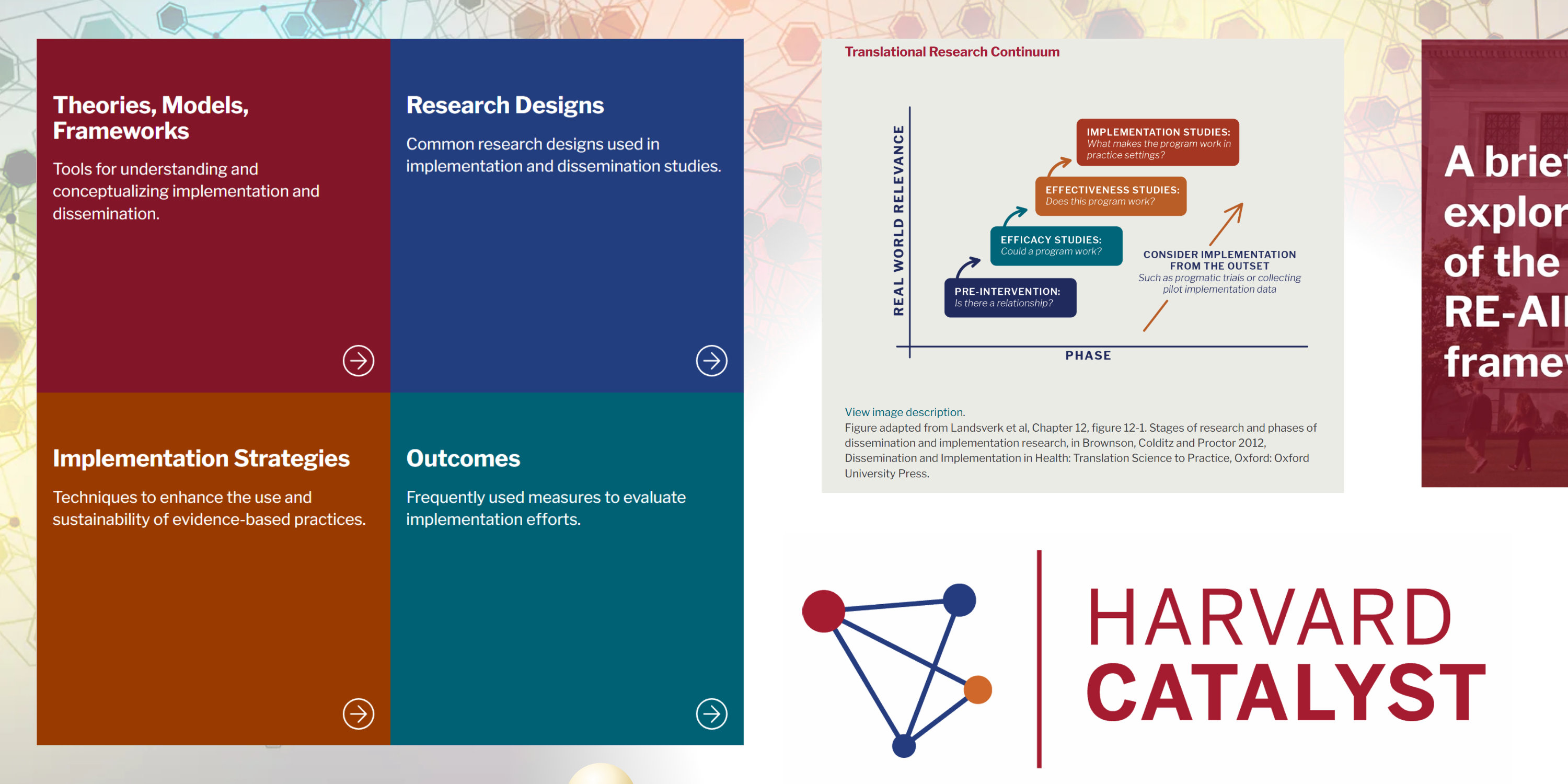
The knowledge base organizes core concepts in dissemination and implementation science into four major content areas.
- Theories, Models, and Frameworks
- Research Designs
- Implementation Strategies
- Outcomes
I structured these areas to support both linear learning and quick reference.
Theories, Models, and Frameworks
Knowledge Base Section Highlight
Harvard Medical School
Resources that explain how D&I theories, models, and frameworks help conceptualize implementation efforts and guide study design.
- Advised on hierarchical structuring for foundational videos, readings, and external tools
- Advised on organizing content around RE‑AIM, CFIR, EPIS, PRISM, and related frameworks
- Directed content development and implementation for "A brief exploration of the RE-AIM framework" by Ko Un "Clara" Park, MD
Learn more at the Theories, Models, and Frameworks section page.
Impact
- Created the foundational structure for a scalable D&I knowledge base
- Unified multiple HMS and multi‑regional curricula into a single, coherent resource
- Delivered the Incubator’s first multimedia instructional asset
- Established a repeatable production model for future content
- Expanded the reach of D&I concepts beyond traditional course formats
How It Scales
- Knowledge architecture supports future videos, interactive tools, and resource lists
- Content structure accommodates updates as the field evolves
- Production workflow can be reused for additional faculty‑led videos
- Resource curation model supports ongoing expansion
Links
D&I 101 section page About
Portfolio
CV
About
Portfolio
CV